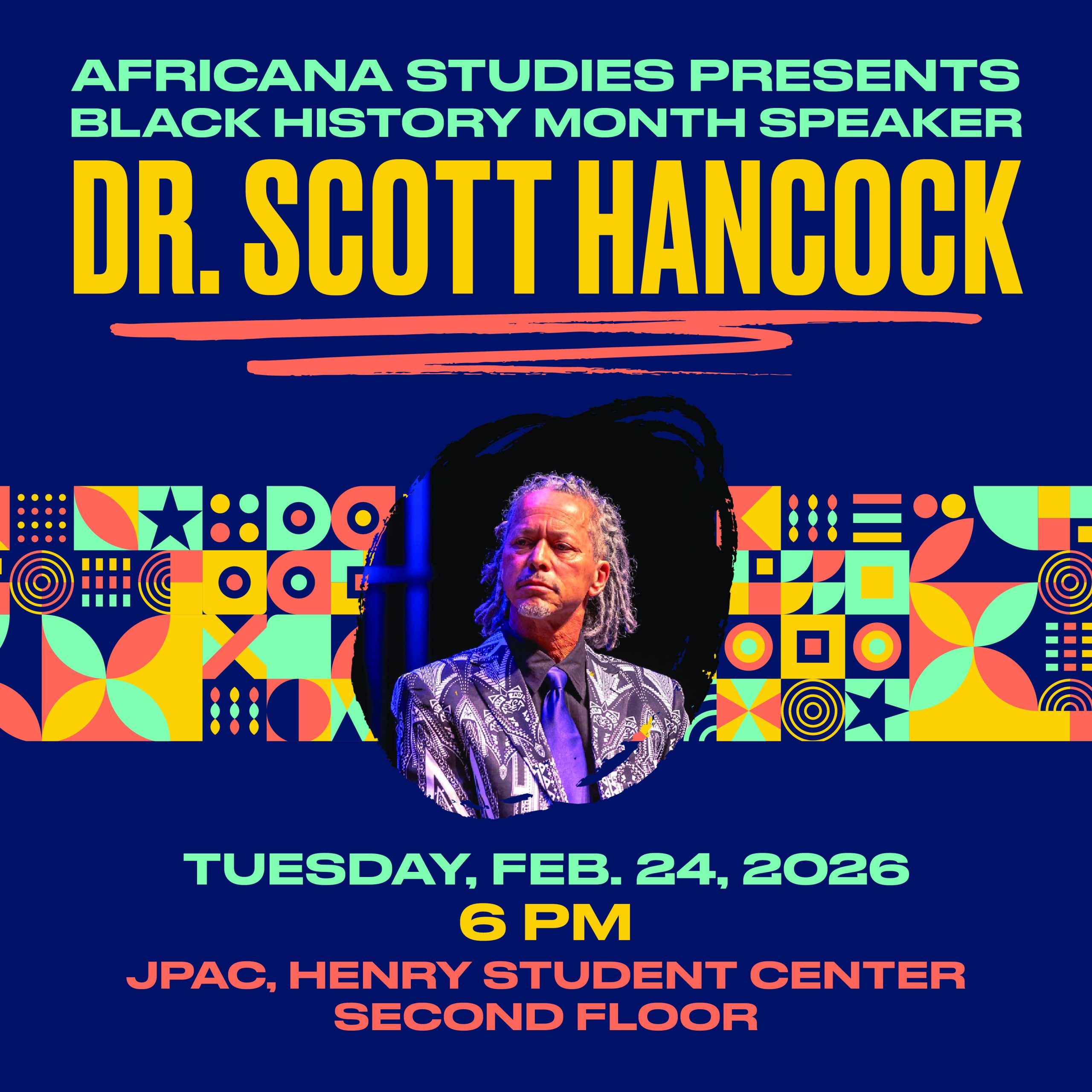
Africana Studies at Wilkes University presents:
“IT WAS A GOOD DAY: BLACK OPTIMISTIC REALISM AND LAW IN THE UNITED STATES”
A Black History Month Talk by Dr Scott Hancock
Tuesday, February 24th, 2026
6:00 PM
JPAC
In 1992, artist Ice Cube released the video “It Was a Good Day.” The video ends with Ice Cube, who has apparently done nothing wrong, at least on this particular day, surrounded by an overwhelming show of force by armed police outside his South Central L.A. home. The video, in some respects, can be read as an expression of the lack of faith many Black Americans had in the system and philosophy that supposedly undergirds the Great Experiment—the foundation and continued existence of the United States of America.
That existence has never been threatened as it was during the American Civil War. And yet, many African Americans, from the country’s founding, through the Civil War, and into the 21st century, have attempted to use law as a primary driver for fundamental legal change. This talk, starting with stories of two women who escaped slavery, and carrying through to a contemporary Black writer, wrestles with the question of whether African Americans have been, and continue to be, bamboozled or buttressed by having any optimism in law in the United States.
Scott Hancock is an associate professor of history and Africana Studies at Gettysburg College. After spending 14 years working with teenagers in crisis, he switched careers and earned a Ph.D. in Early American History in 1999. Both careers fuel his desire to understand how African Americans have shaped and been shaped by American law and memory, and motivate him to tell the stories of people whom society and history have discounted as troublesome or unimportant. He is currently exploring how places like the Gettysburg battlefield can put African Americans and slavery back into the heart of stories told by landscapes and memorials. Some of his scholarly work has appeared in scholarly journals and anthologies, such as The Civil War and the Summer of 2020, They Are Dead and Yet Live, and his book Walk Up The Hill: A College Student’s Guide to Scholar Activism. As part of trying to be a scholar activist, he has also written for public audiences in local, regional and national publications, and welcomes engaging with people in a variety of forums, including talking with visitors to the Gettysburg battlefield.
This event is co-sponsored by the Division of Global Cultures, the Associate Provost for Academic and Diversity Affairs, and the Dean of the College of Arts & Sciences.